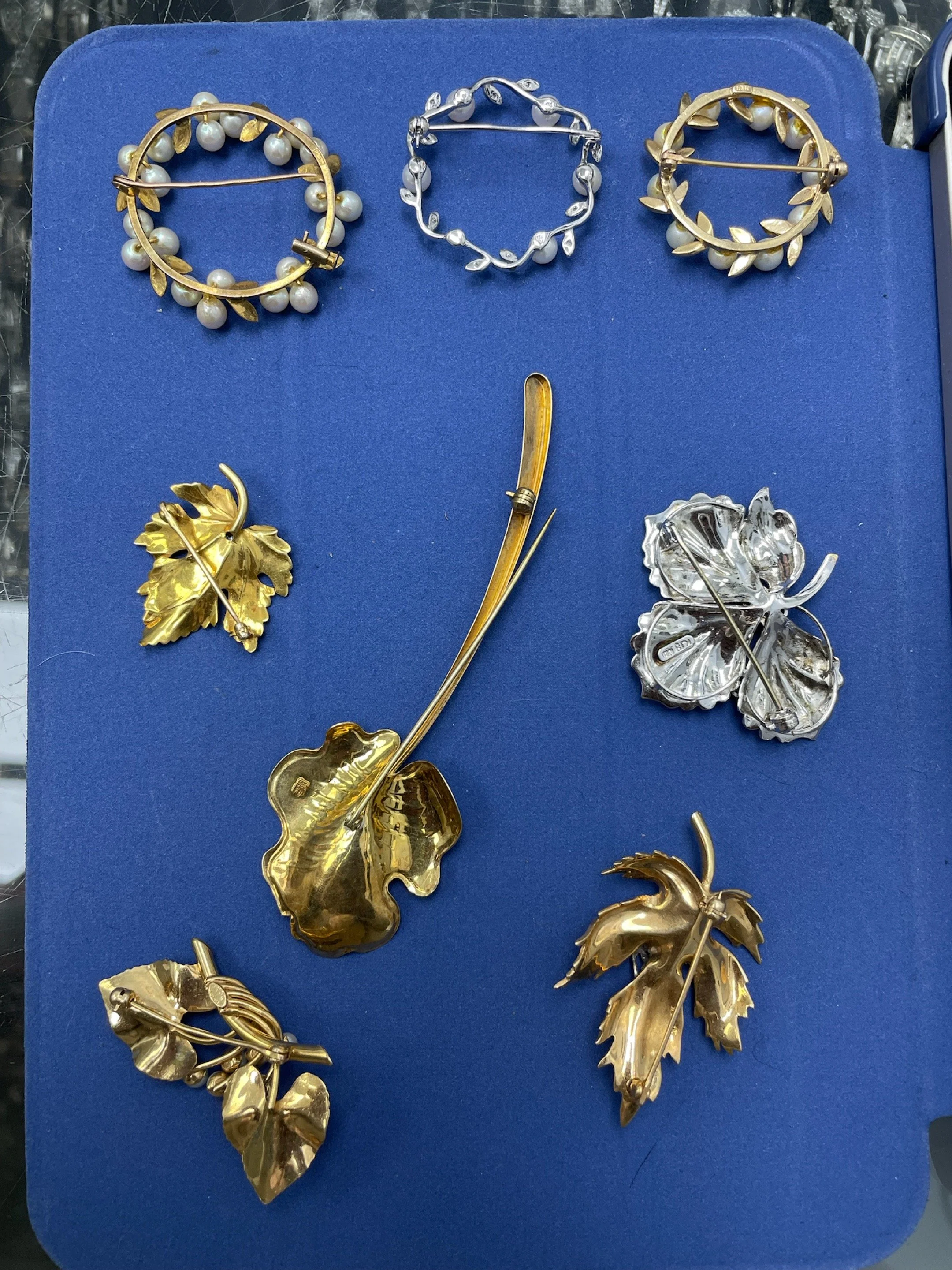

The Timeless History of the Brooch: From Ancient Fasteners to Art Nouveau Masterpieces
Long before necklaces became everyday accessories or rings symbolized romance, there was the brooch. One of the oldest forms of jewelry known to humanity, the brooch has adorned clothing for thousands of years, evolving from a practical necessity into one of the most artistic expressions of wearable design.
The Origins of the Brooch
The earliest brooches date back to the Bronze Age, around 1800–1200 BC, when they were known as fibulae. These early pieces functioned much like a modern safety pin, securing heavy cloaks and garments before buttons and zippers existed. Crafted from bronze, iron, and eventually precious metals, they quickly became symbols of status and craftsmanship in ancient Greek, Roman, and Celtic cultures.
As jewelry-making techniques advanced, brooches transformed from simple fasteners into decorative treasures. During the medieval period, they were embellished with gemstones, enamel, pearls, and intricate metalwork, often worn by royalty, clergy, and nobility as symbols of wealth, devotion, and prestige.
The Golden Age of Artistic Brooches
By the late 19th century, the Art Nouveau movement (1890–1910) completely reimagined what jewelry could be. Rather than focusing solely on diamonds and precious gems, Art Nouveau designers celebrated nature, movement, and artistry.
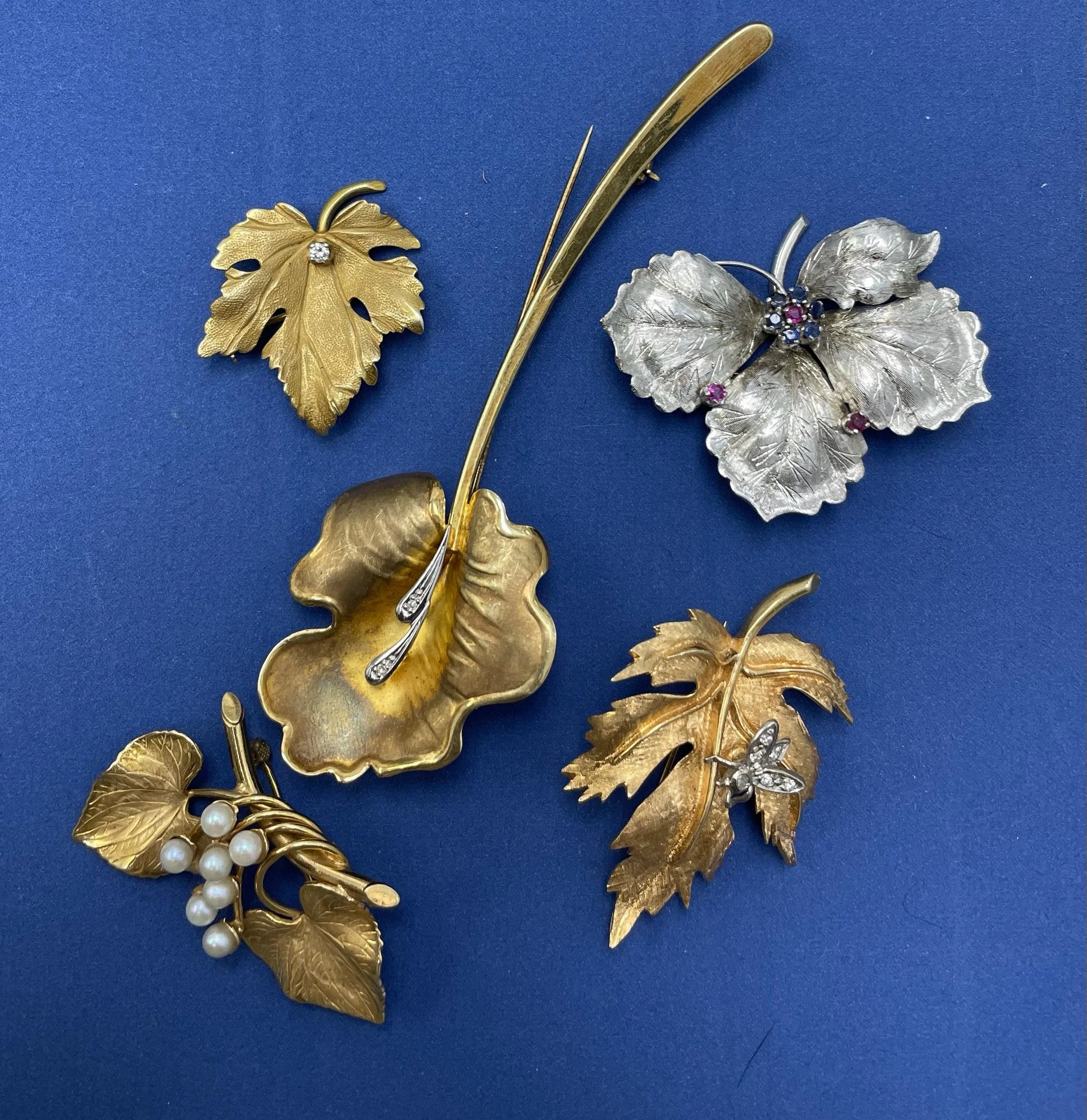
Leaves, flowers, vines, dragonflies, butterflies, and flowing botanical forms became the defining motifs of the era. Inspired by the natural world, jewelers crafted brooches with graceful, organic lines that appeared almost alive. Soft enamels, moonstones, opals, pearls, and colored gemstones were paired with expertly sculpted gold and silver to create miniature works of art.
Leaf brooches, like the examples shown here, beautifully capture the movement and elegance that made Art Nouveau jewelry so revolutionary. Every curve and vein was thoughtfully designed to mimic nature, celebrating the beauty found in even the simplest leaves and branches.
Why Collectors Love Antique Brooches
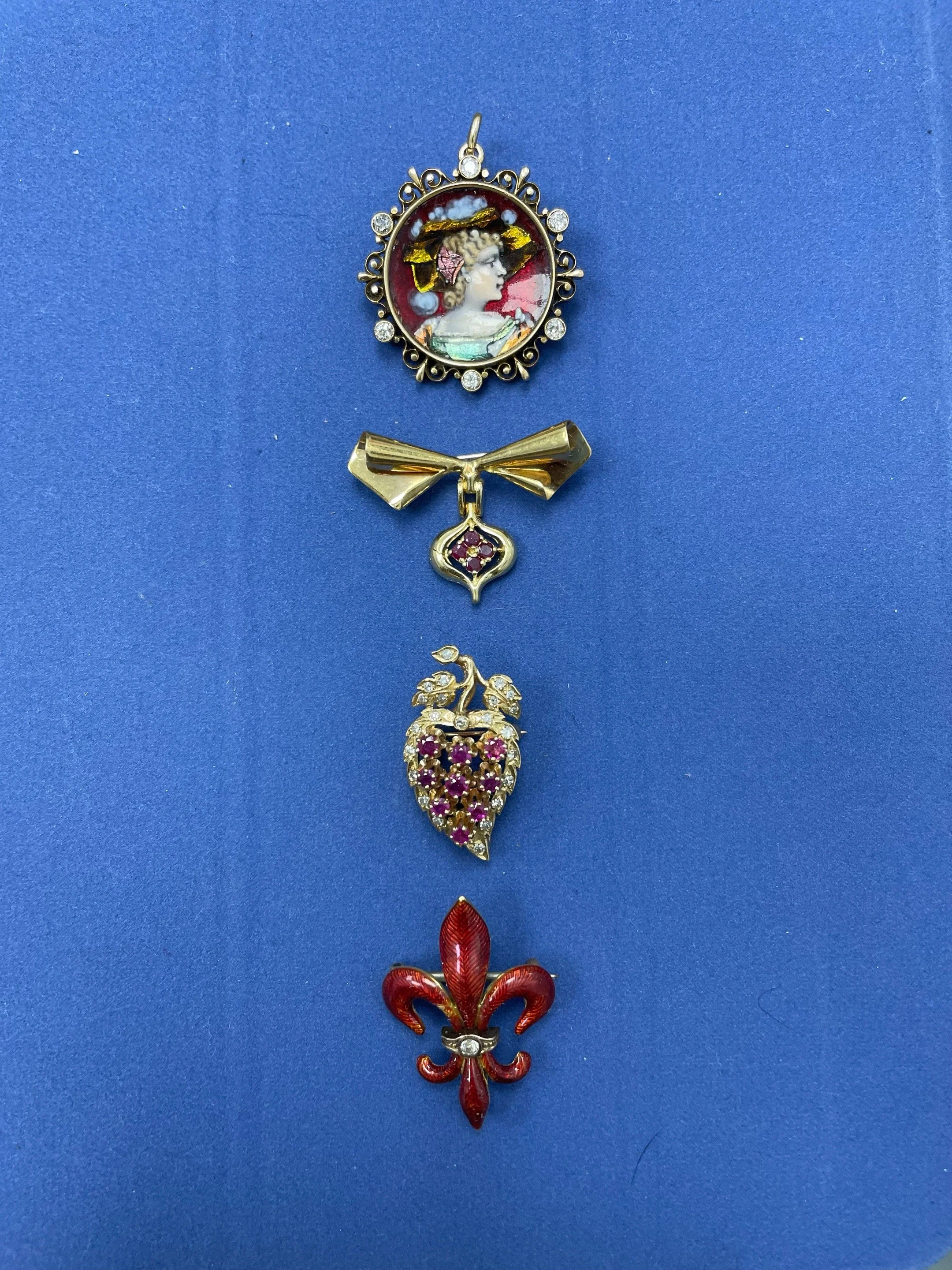
Today, antique brooches remain some of the most versatile pieces in a jewelry collection. While they were originally worn to fasten garments, modern collectors style them on lapels, scarves, sweaters, handbags, hats, and even as pendants on necklaces.
Each brooch tells a story—not only of the person who once wore it, but of the artistic movement and historical period in which it was created. Art Nouveau brooches are especially treasured because they represent a brief yet incredibly influential chapter in jewelry history where craftsmanship, imagination, and nature came together in perfect harmony.
Owning an antique brooch is more than collecting jewelry—it’s preserving a small piece of history, handcrafted by artisans whose work continues to inspire over a century later.