
 Image 1 of 3
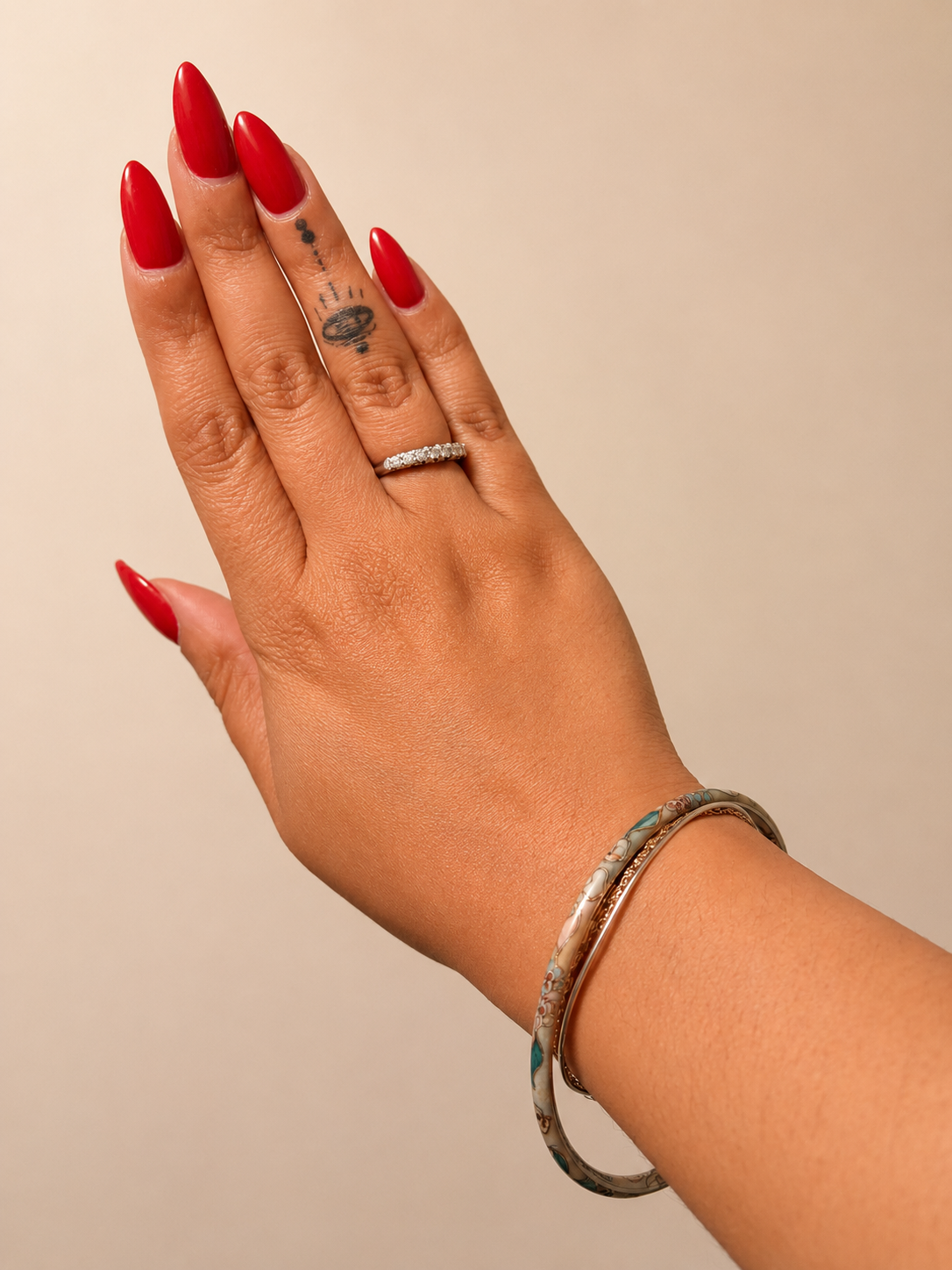 Image 2 of 3
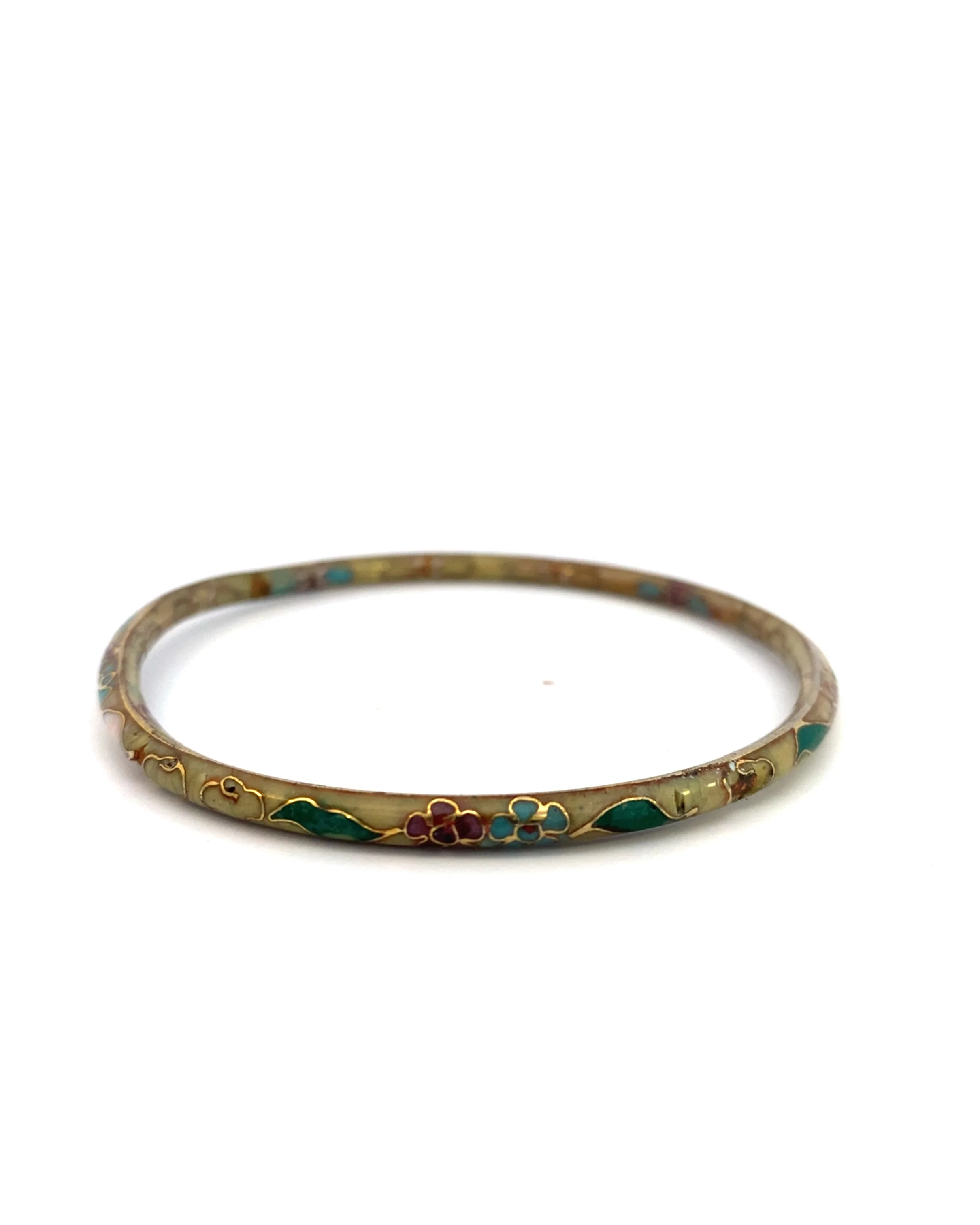 Image 3 of 3
Cloisonné is an ancient decorative art technique, long associated with East Asian traditions—especially China and Japan. The process begins by soldering fine metal wires or strips onto a metal base to form delicate compartments (cloisons). Those compartments are filled with colored vitreous enamel paste, then fired. After repeated firings and polishing, the result is a smooth, lustrous surface where the metal lines remain as crisp partitions between vibrant color fields.
Historically, cloisonné has graced objects ranging from vases and bowls to religious items, decorative panels, and jewelry. Its appeal lies in the combination of meticulous metalwork and richly colored enamel, producing pieces that are both durable and visually striking.
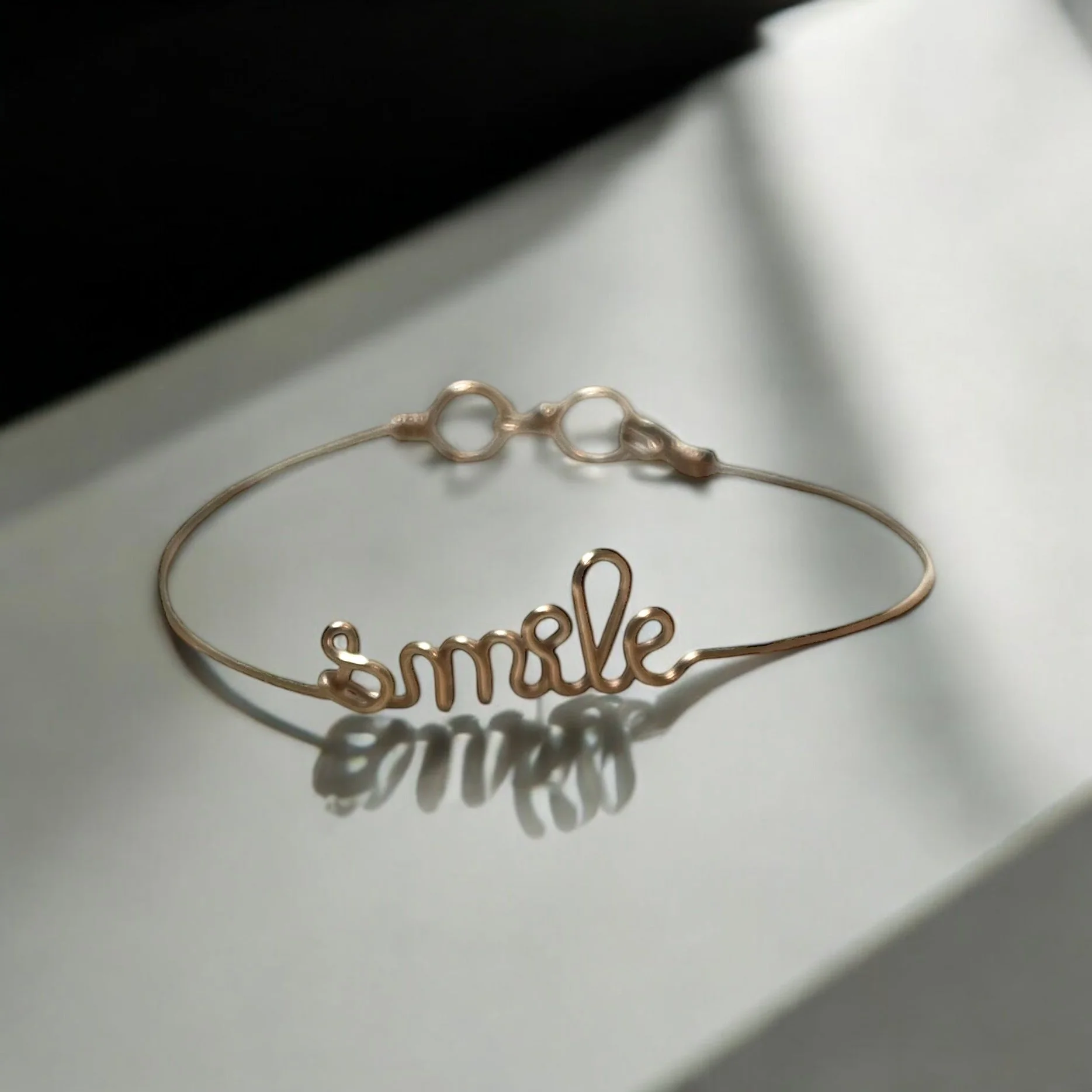
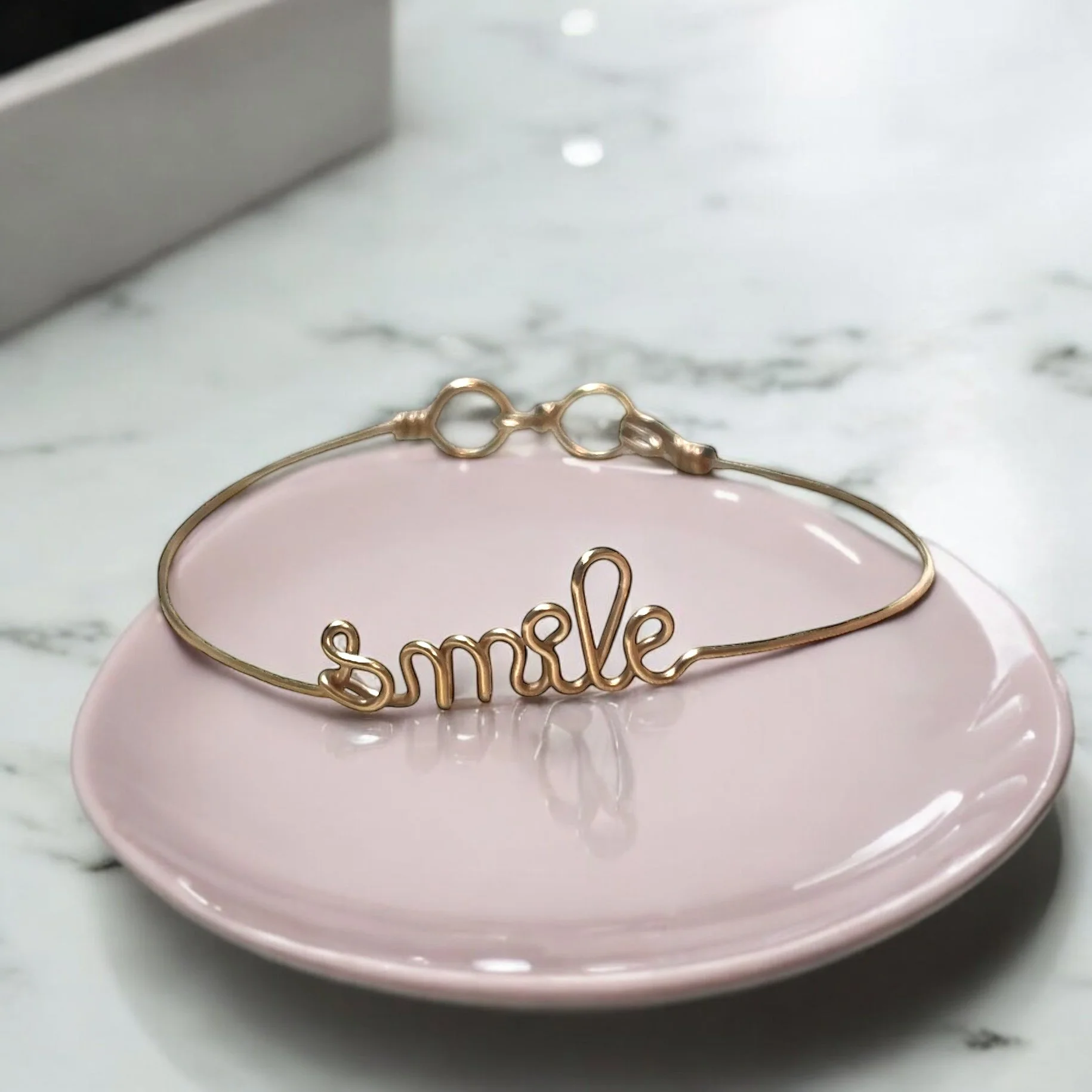
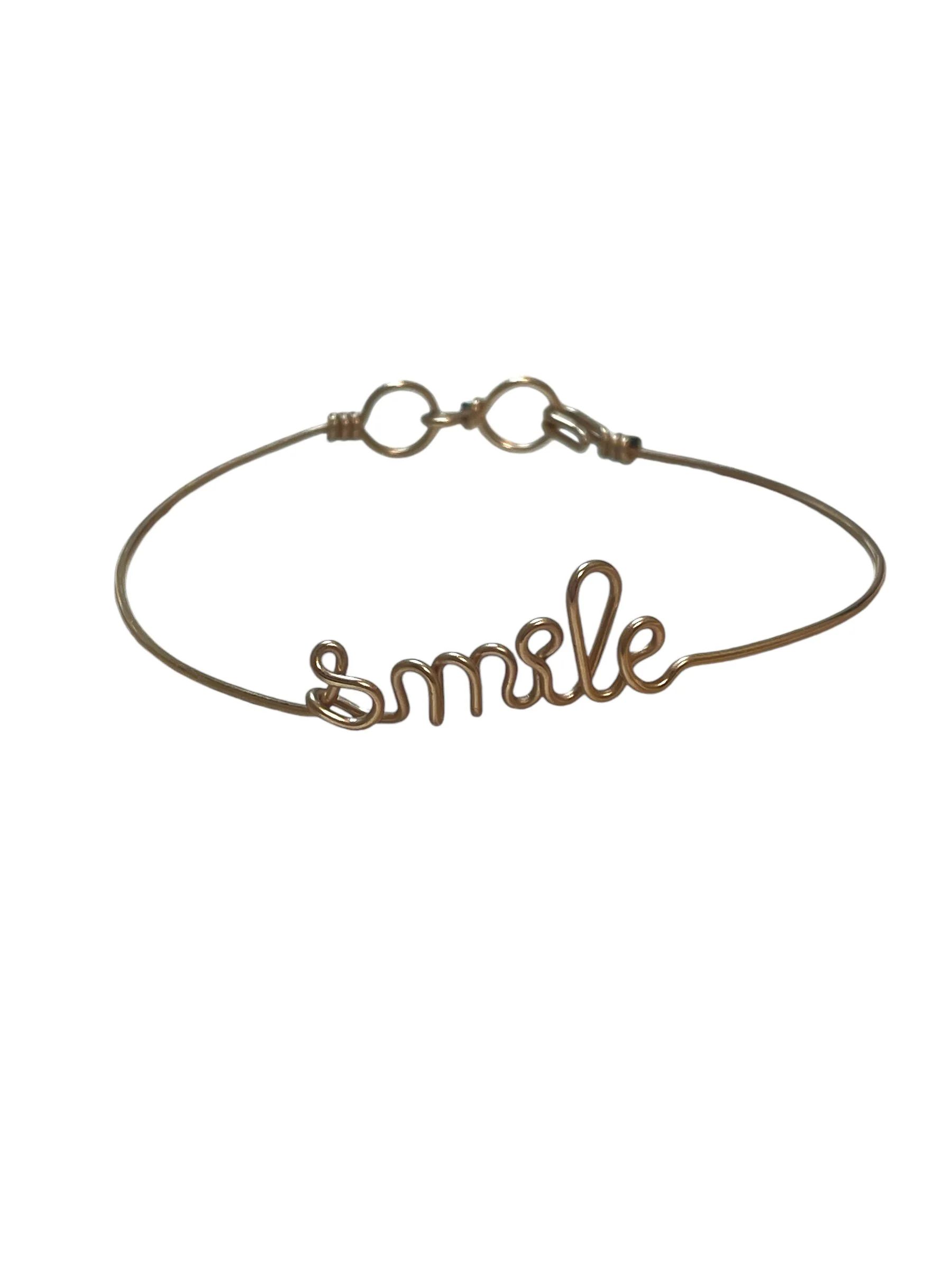
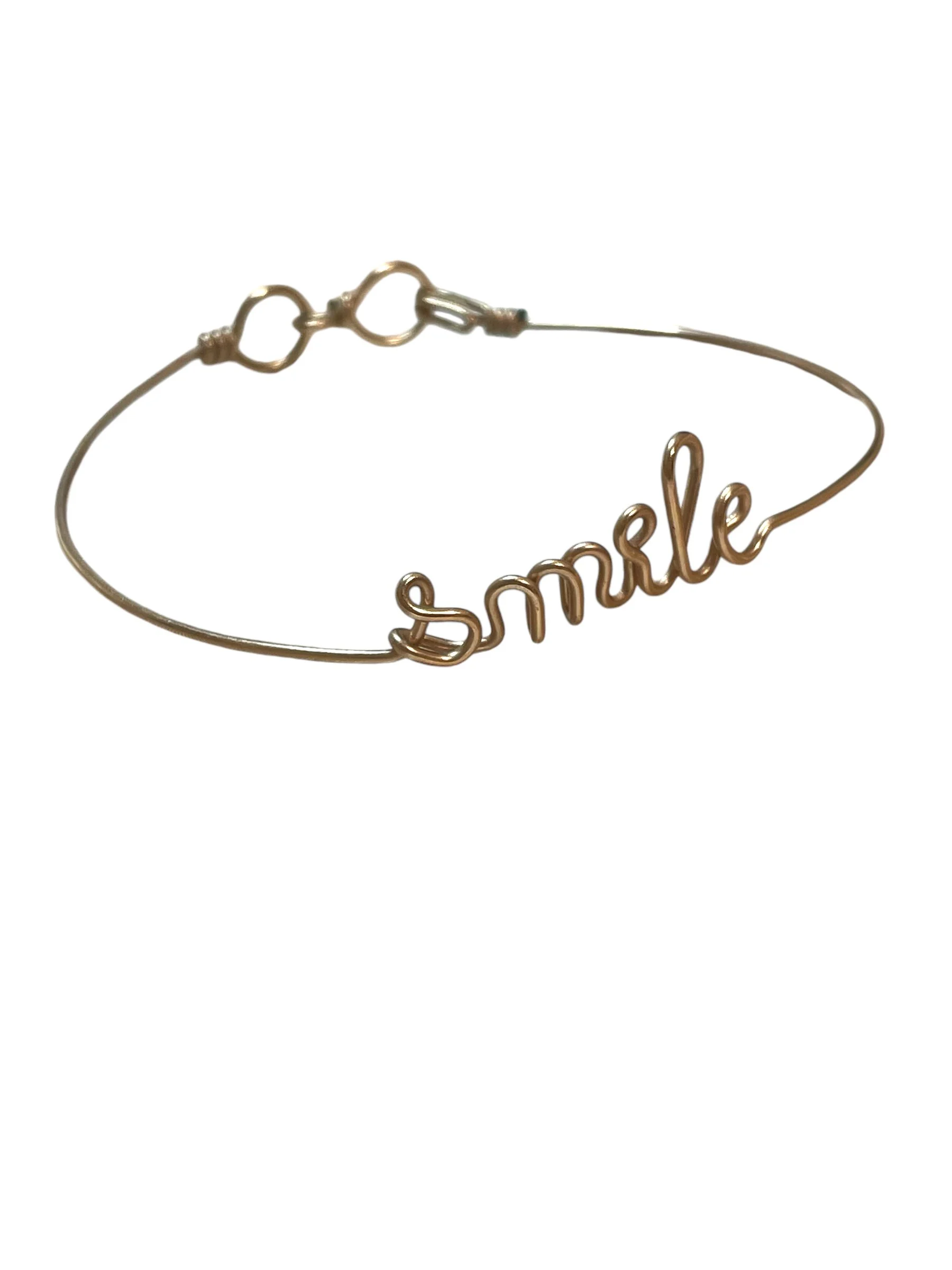
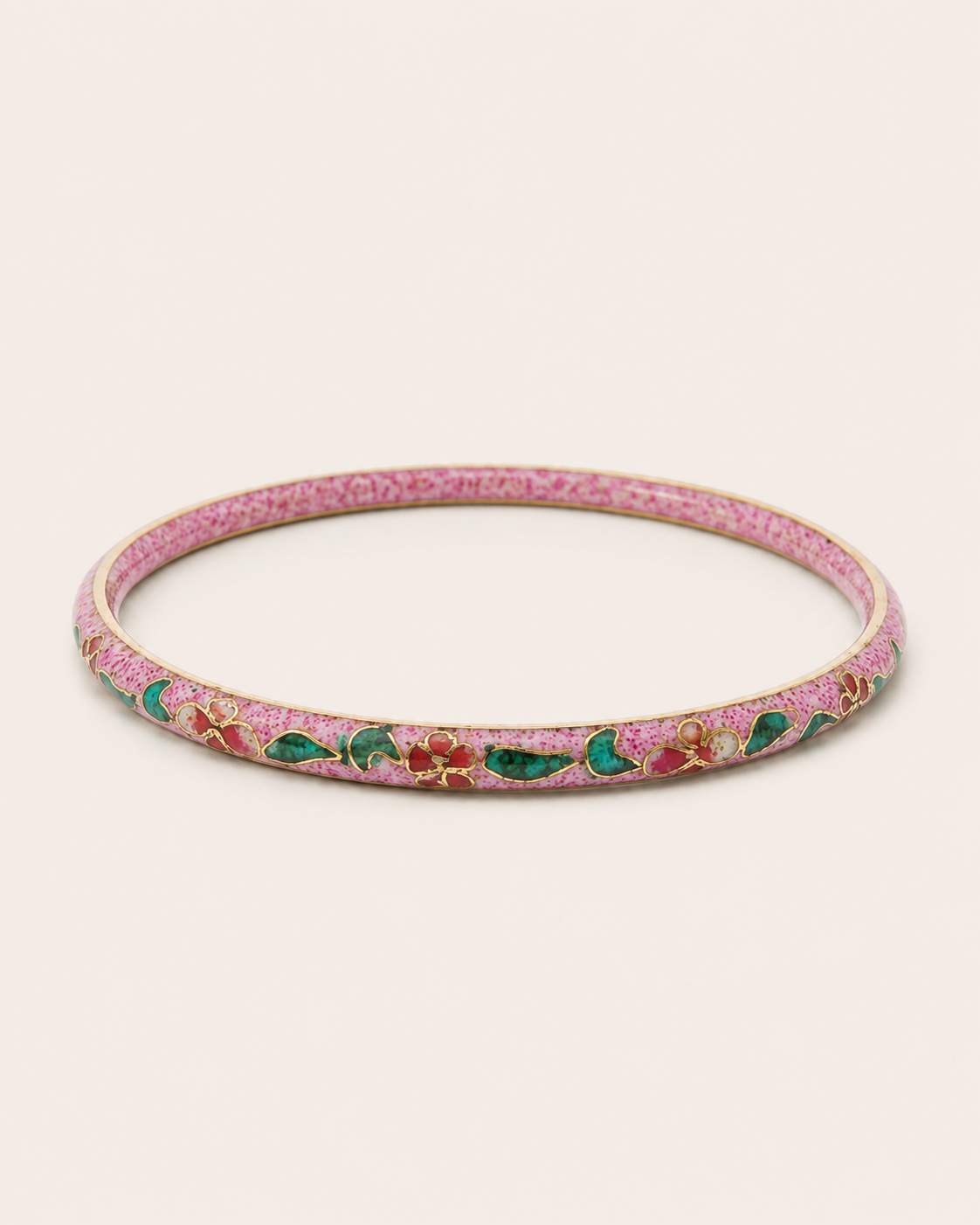
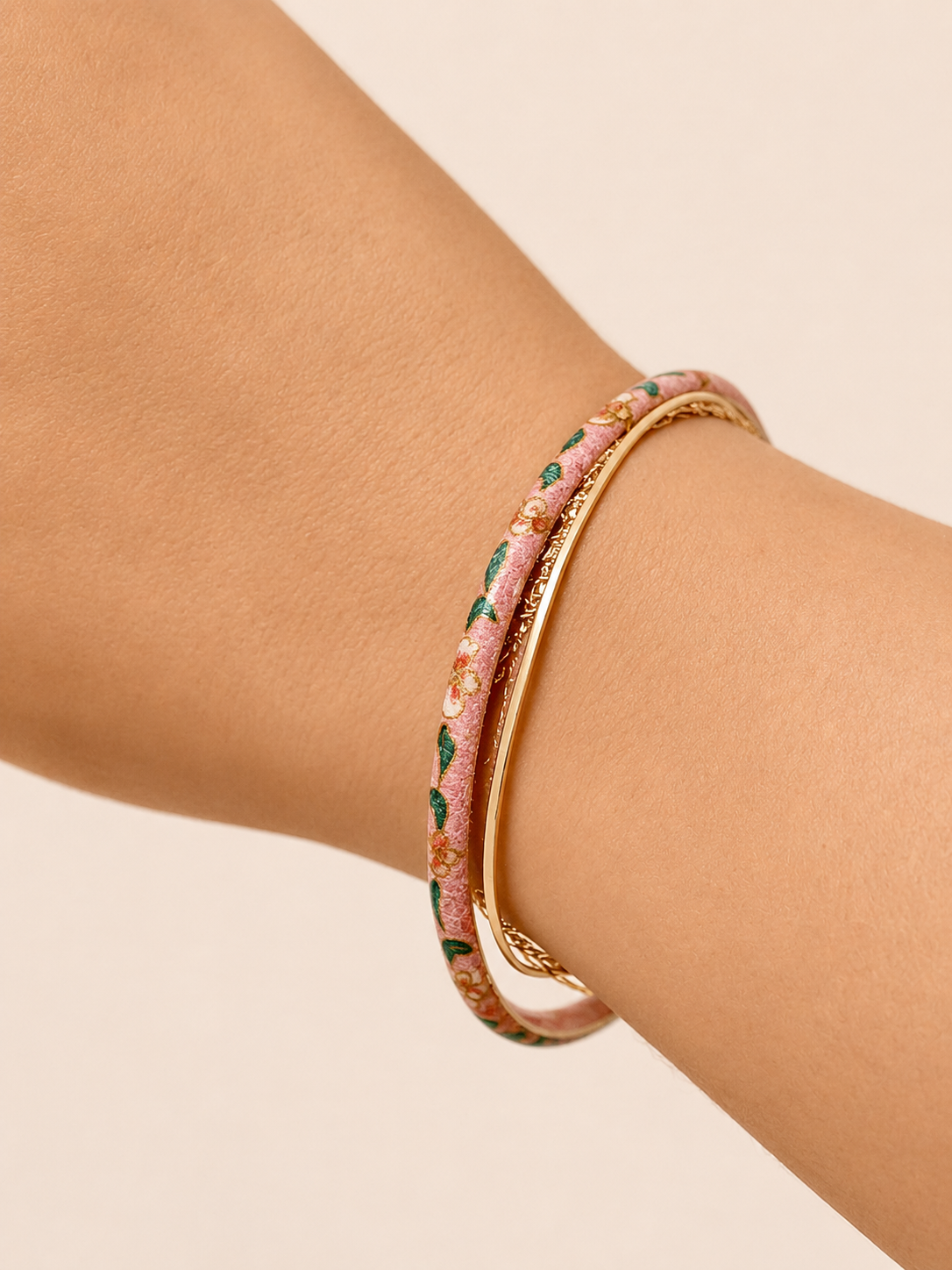
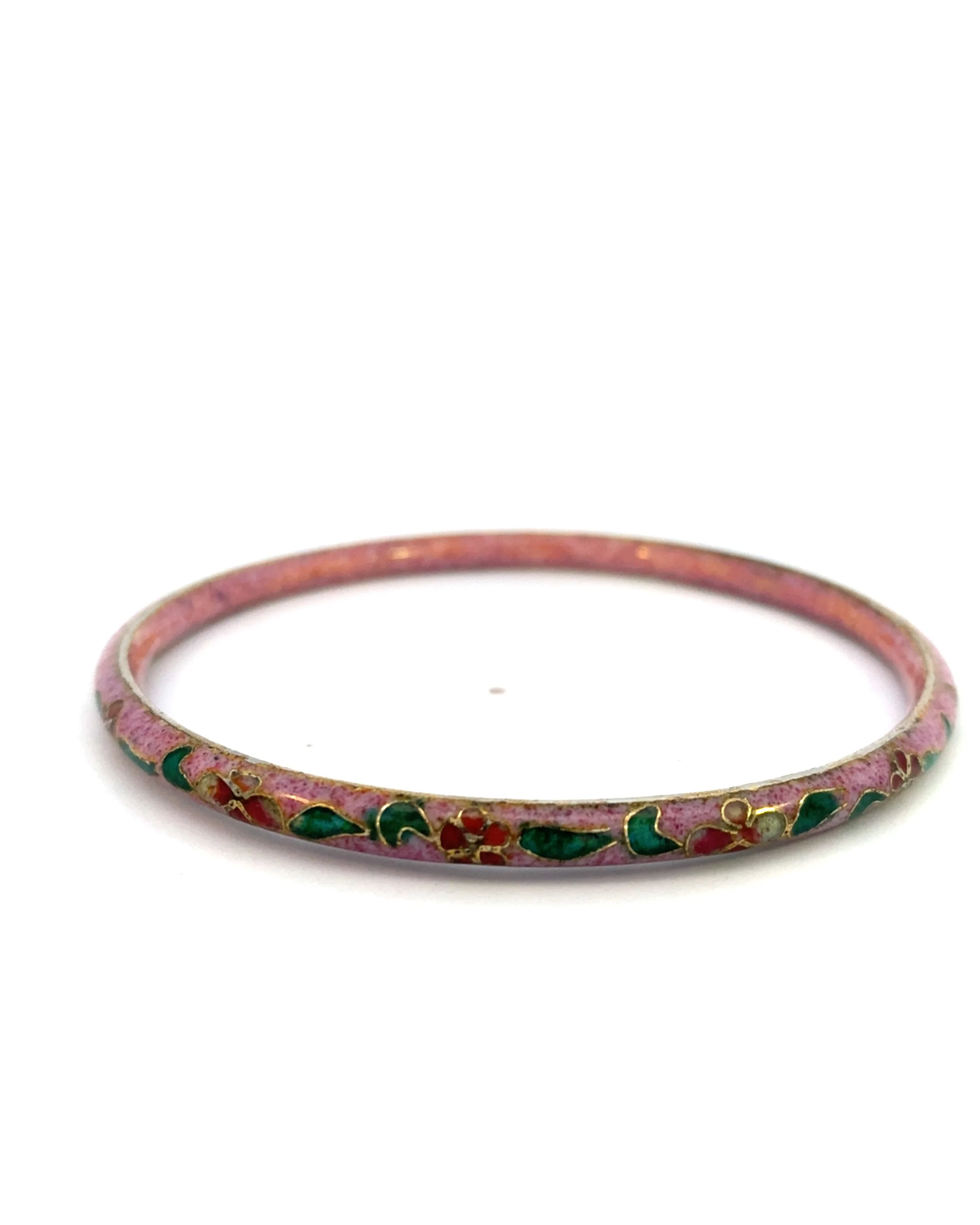
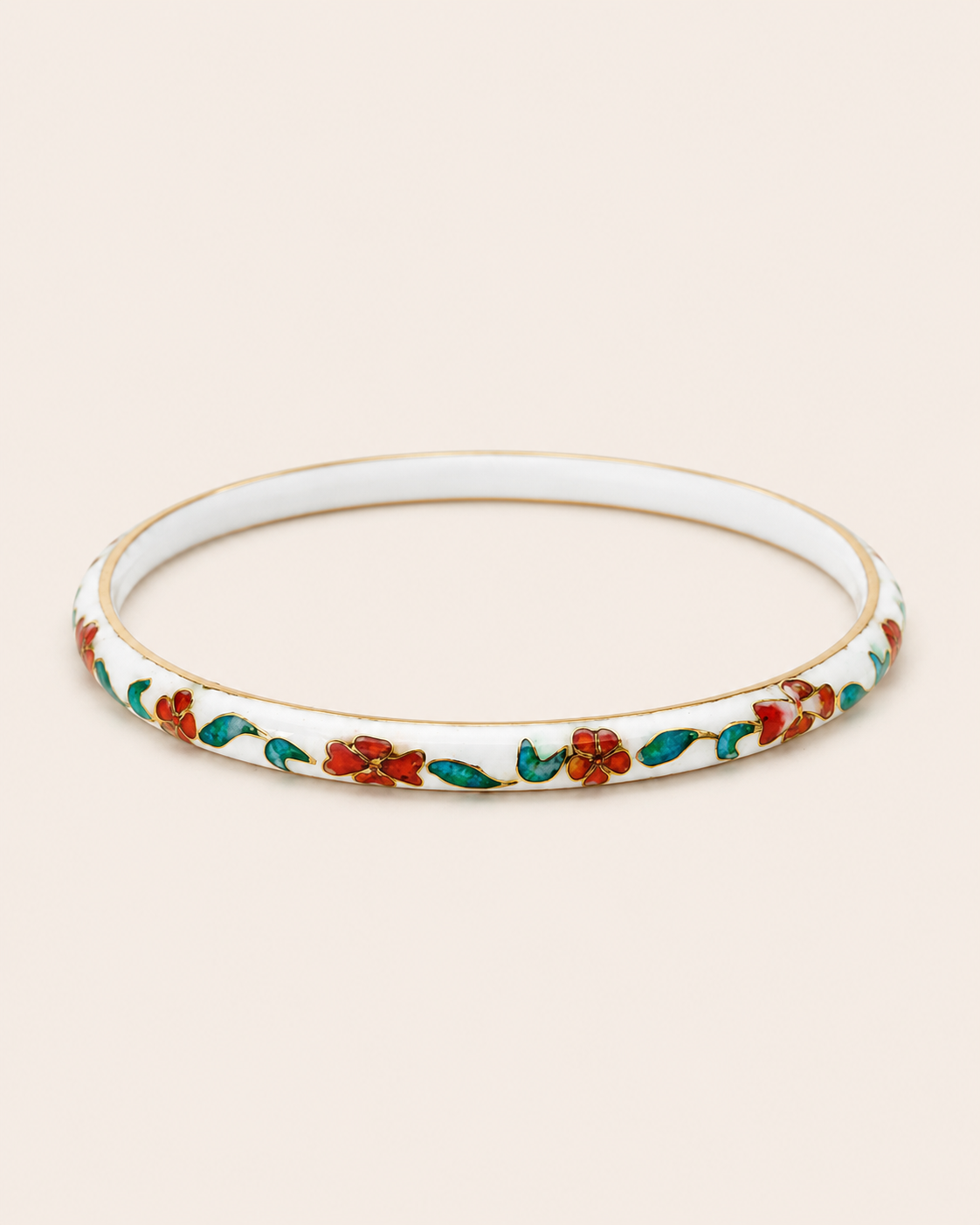
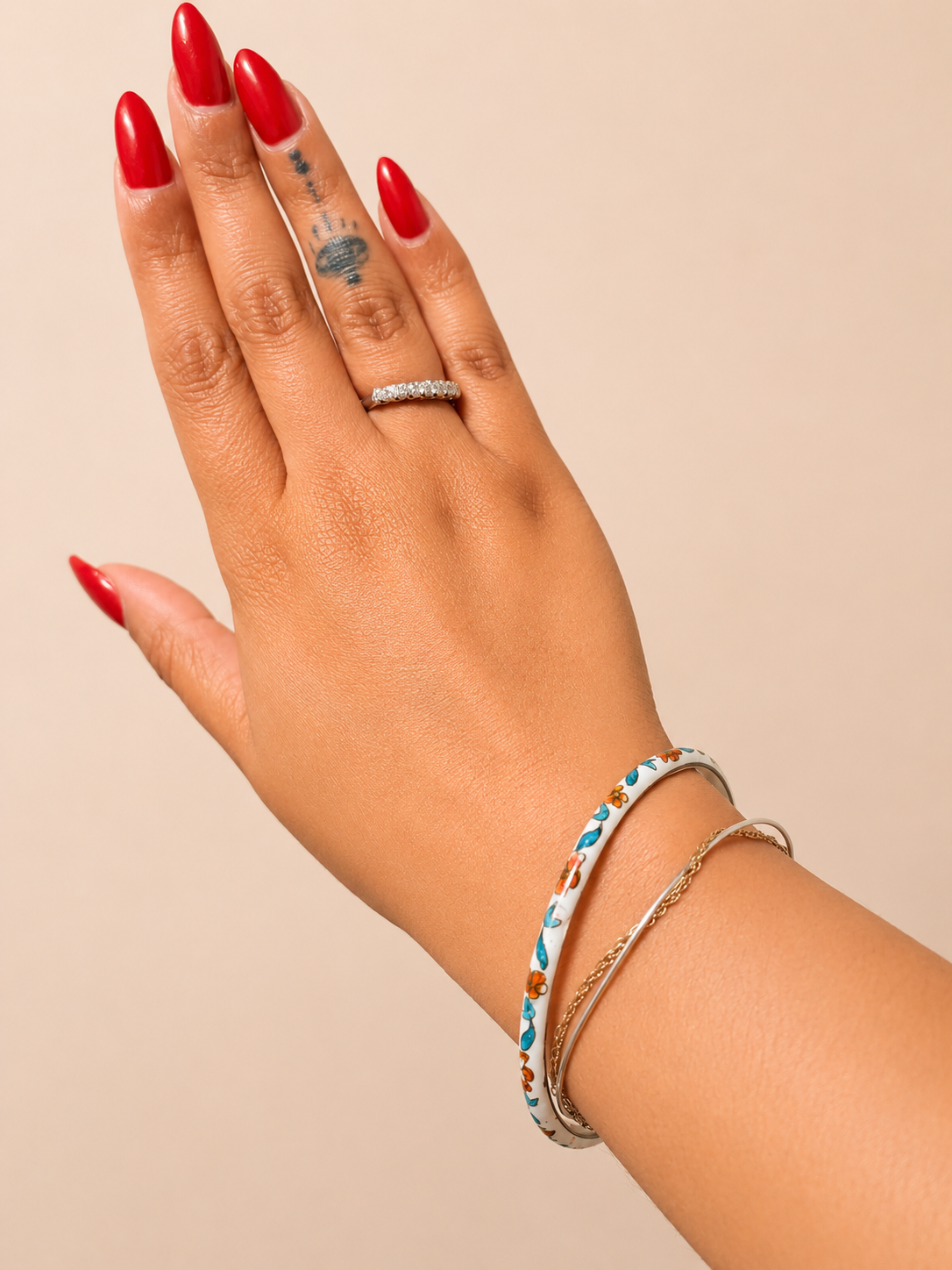
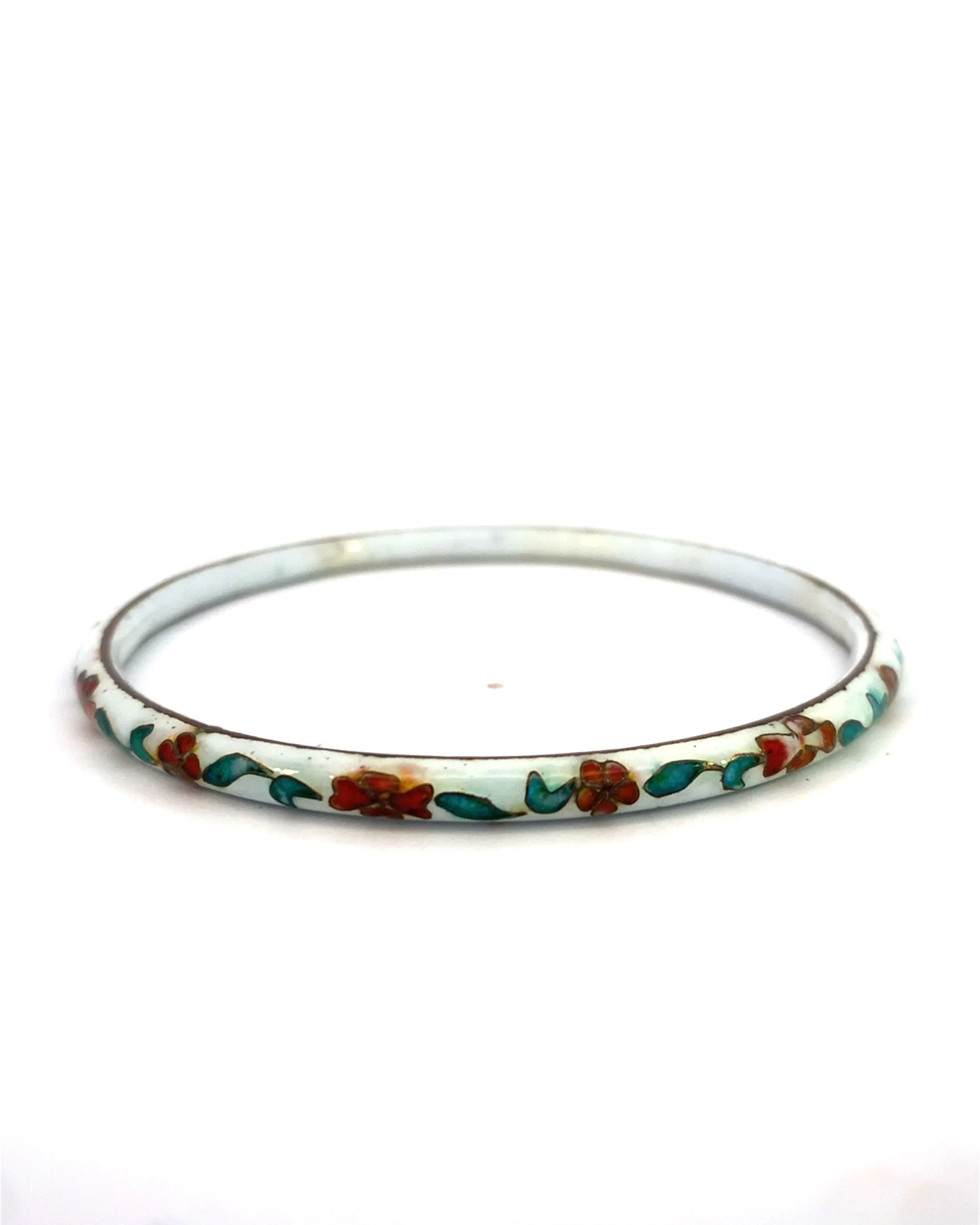
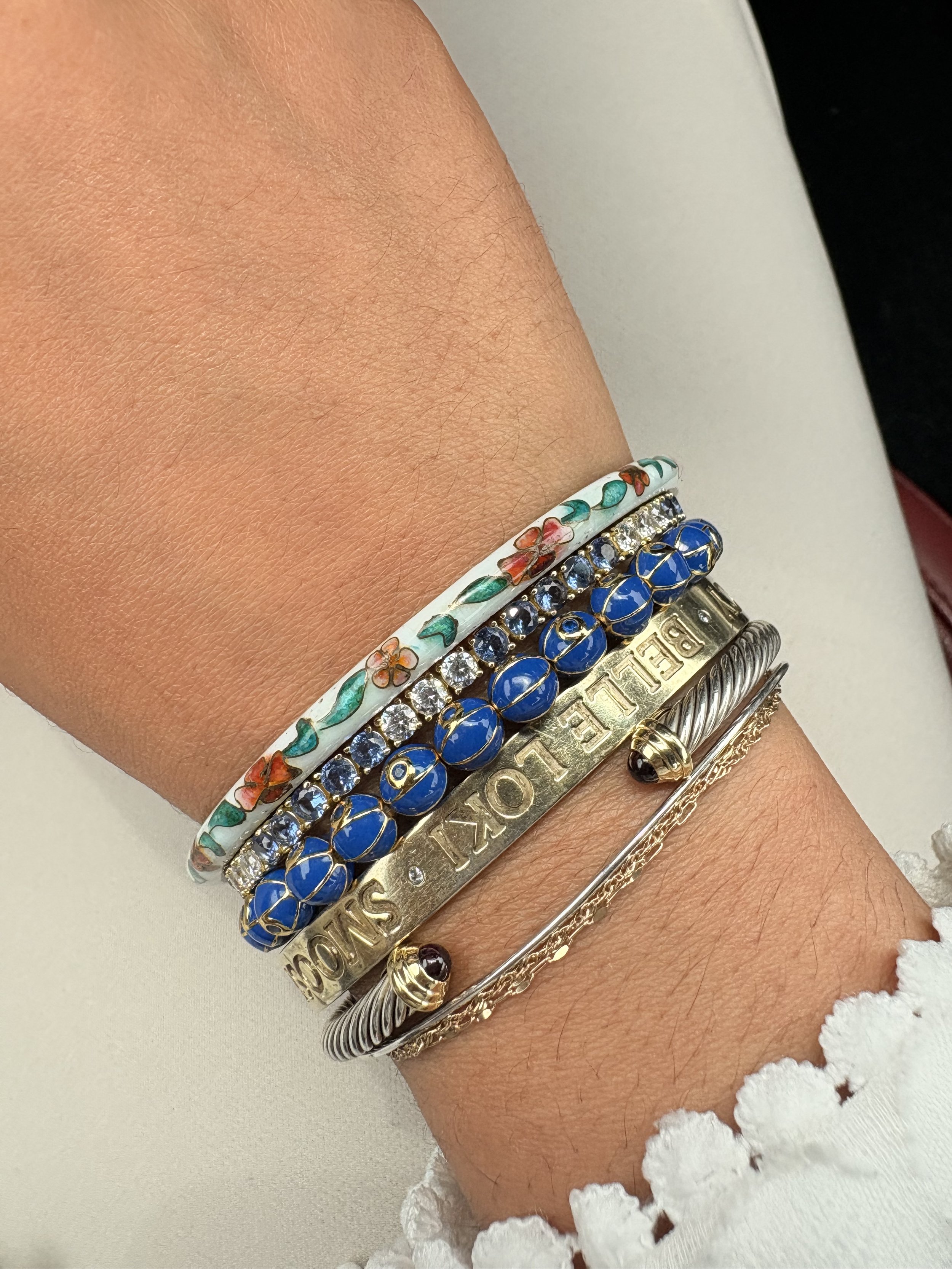
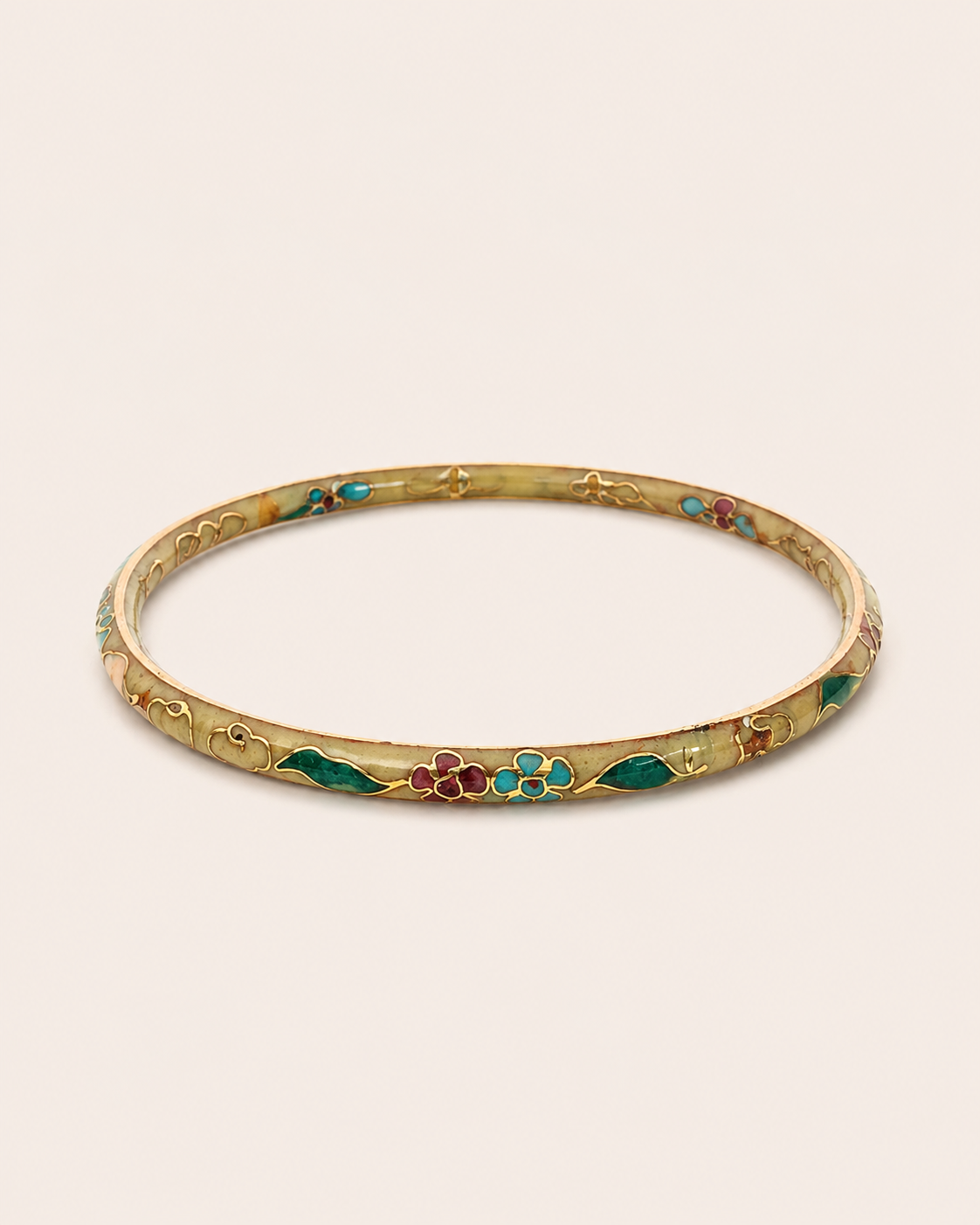
This bangle represents a more modern interpretation of the cloisonné tradition—likely a mid- to late-20th-century, mass-produced accessory. It retains the signature colorful enamel and the metal wire detailing that defines cloisonné, but the overall execution and visible wear indicate it’s not a high-end antique. During the 20th century, cloisonné techniques were adapted for more affordable decorative items, making intricate, enamelled designs accessible as everyday personal adornment rather than exclusive collector’s pieces.
Wear such as minor enamel loss, surface scratches, or slight discoloration of the metal is common in these later pieces and reflects regular use rather than damage to the technique itself. While not a rare antique, this bangle still showcases the enduring visual appeal of cloisonné—an attractive, wearable example of a centuries-old decorative art updated for modern fashion.
Cloisonné is an ancient decorative art technique, long associated with East Asian traditions—especially China and Japan. The process begins by soldering fine metal wires or strips onto a metal base to form delicate compartments (cloisons). Those compartments are filled with colored vitreous enamel paste, then fired. After repeated firings and polishing, the result is a smooth, lustrous surface where the metal lines remain as crisp partitions between vibrant color fields.
Historically, cloisonné has graced objects ranging from vases and bowls to religious items, decorative panels, and jewelry. Its appeal lies in the combination of meticulous metalwork and richly colored enamel, producing pieces that are both durable and visually striking.
This bangle represents a more modern interpretation of the cloisonné tradition—likely a mid- to late-20th-century, mass-produced accessory. It retains the signature colorful enamel and the metal wire detailing that defines cloisonné, but the overall execution and visible wear indicate it’s not a high-end antique. During the 20th century, cloisonné techniques were adapted for more affordable decorative items, making intricate, enamelled designs accessible as everyday personal adornment rather than exclusive collector’s pieces.
Wear such as minor enamel loss, surface scratches, or slight discoloration of the metal is common in these later pieces and reflects regular use rather than damage to the technique itself. While not a rare antique, this bangle still showcases the enduring visual appeal of cloisonné—an attractive, wearable example of a centuries-old decorative art updated for modern fashion.